Showing posts with label providence. Show all posts

Friday, February 4, 2011

Memorial Boulevard Rigid Frame

Back in July of 2009 I rated a rigid frame in Providence RI which carries Memorial Boulevard over a pedestrian underpass. The frame spans 40 feet allow foot traffic to the Providence and Woonsaquatucket River where each year the Waterfire festival is held. The frame was constructed in 1994 and has several unique features.

The reason I remembered this bridge is from reading tallbridgeguy's post on Green Bridge and Landscaping, where he mentions the positives of adding flower plants and trees along with negatives freeze/thaw (a big problem in New England), drainage, extra load and maintenance.

Along with planters the bridge also has a glass atrium which allows light to the underside of the frame and decorative tiling along the legs of the frame.
These decorative accents help create an aesthetically pleasing bridge which is the goal for both a consultants and a necessity for clients when it comes to pedestrian traffic. When it comes to this bridge tho these accents can cause problems down the road. As most would suspect the glass atrium now has several broken panes, the tiles do not allow for inspection of the legs and the underside of the roof below the plants have cracking with efflorescence, incrustation and stalactites. 
The rating of the concrete rigid frame was performed using influence lines to determine the maximum live load effects and we treated the rigid frame's support conditions as pinned-pinned.
The architectural “waffling” on the underside of the rigid frames was not considered as a structural component and was not taken into account as part of the section properties. 
  

Wednesday, March 10, 2010

Rolled Steel Beam Bridge Inspection

Today I inspected a two simple span rolled steel beam bridge in Providence. The bridge had section loss to the beam ends and several areas of spalling concrete. 
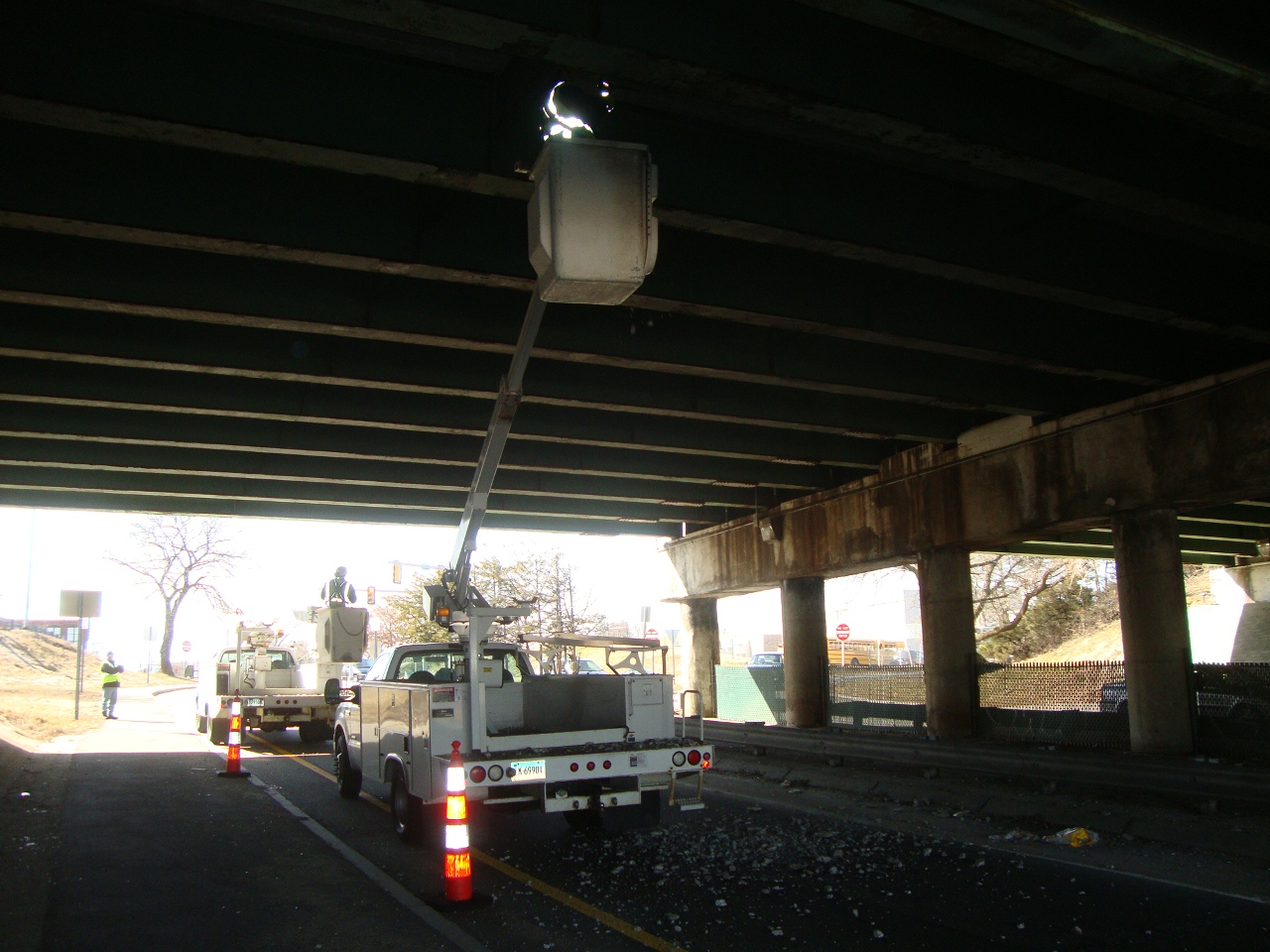
The spalls to the deck were so severe that we had to hold traffic while we removed incipient spalls that could fall onto the traffic below.

The deteriorated expansion joint over the pier continues to cause trouble for the steel beams and pier cap below.

Friday, August 28, 2009

Providence's I-Way Invertory Inspections


Today started with a stop in Millbury MA to pick up an ice coffee at DDs and bagel. With sunny skys and a nice wind off the water, it was a shame to spend the day inside of a steel box girder. With access hatches at the ends of each span I was able to enter with the help of a bucket. The box girder is 8 feet tall and has trapezoidal shaped girders which allowed for easy movement through the inspection. 
The next bridge on the other hand had limited space and when I had to double check bearing connections and end diaphragm screens, movement was awkward and time consuming.


Friday, June 26, 2009

I-195 over the Providence River

The past few weeks before the rain started I was out inspecting the Providence River Network Arch which was featured on an episode of Mega Movers on the History Channel. 
The arch was assembled downstream from the bridge site and moved by barge to the piers. 
Also included in the inspection of the arch were the cables and connections to the arch and bottom cord. With two 45 foot bucket trucks and an 80 foot man lift we were able to inspect the North and middle arch. The inspection of the South arch is being scheduled for a night in the near future when we can safely close one lane of traffic over the bridge.
The arch spans over 400 feet over the river and allows boats to pass under the bridge and through the hurricane barriers. The underside of the arch including the bottom cord and floorbeams were inspected using a man lift on a barge.
The bridge also has two spans which consist of steel box girders and four spans consisting of concrete butted box beams. The spans consisting of concrete butted box beams are were labeled up to "MM", very close to the maximum number of beams I have inspected in one span.
The interior of the steel arch was inspected after the air was tested and okeyed by confined space professionals. While inspecting the interior the use of a mask, air quality monitor and a tyvek suit came in handy. While inspecting the interior of the arch cracks were noticed in the welded diaphragm connections and were confirmed using dye penetrant tests in multiple locations.
Goodbye Providence River Bridge, see you in two years??